

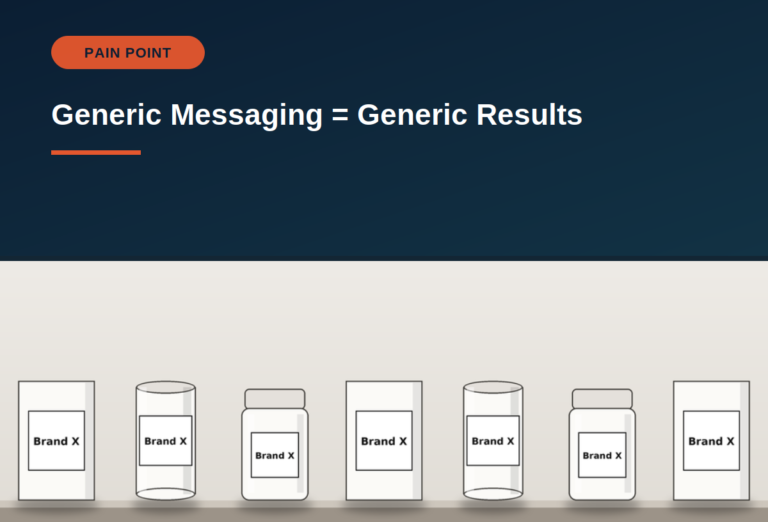
Repositioning work is judged the wrong way more often than not, by whether the new tagline sounds better, rather than by what actually changes in the pipeline. Here’s what a real before-and-after looks like when it’s measured correctly.
What does the “before” state of branding typically look like?
Before repositioning, most companies share a familiar pattern: messaging that could apply to two or three direct competitors with only the logo swapped out, a sales team that improvises its own explanation of “what makes us different” because the marketing version doesn’t survive real buyer questions, and a pipeline where win rates against a specific competitor are noticeably worse than win rates overall, a sign the positioning simply isn’t holding up in head-to-head evaluations.
What actually changes once brand repositioning is done well?
The most reliable early signal isn’t traffic, it’s the quality of the conversations sales starts having. Dad’s Growth Lab’s alignment research found that organizations with strong sales-and-marketing alignment grow revenue 19% faster and are 15% more profitable than misaligned peers, and repositioning work is one of the fastest ways to force that alignment, because it requires both teams to agree on the same differentiated story before it goes anywhere. The same research found tightly aligned teams generate up to 208% more revenue from marketing efforts than misaligned companies, which is the scale of gain repositioning is actually chasing, not just a cleaner-looking homepage.
How does the brand shift show up in the numbers?
Watch three metrics specifically: win rate against your top one or two named competitors (this should climb first, often before overall win rate moves), the length of the sales cycle for opportunities that came through channels using the new positioning (shorter, because less time is spent re-explaining differentiation from scratch), and the ratio of sales qualified leads to total leads, since sharper positioning changes who self-selects into your funnel in the first place, not just how they’re greeted once they arrive.
What does a realistic brand positioning timeline look like?
- Weeks 1–2: the new positioning statement is finalized and validated against sales feedback and customer interviews.
- Weeks 3–6: it’s rolled out across the website, paid campaigns, and sales enablement materials, with the sales team specifically briefed on how to carry it into live conversations.
- Weeks 7–12: lead qualification rates and competitive win rates begin to show a measurable shift, tracked in the same monthly report used for every other part of the accelerator.
Why is brand positioning worth doing even when the current messaging “isn’t broken”?
Because “not broken” and “differentiated” aren’t the same thing, and the gap between them is exactly where competitors quietly take deals that should have been winnable. Repositioning done properly doesn’t just make the brand sound better; it changes who shows up in the pipeline and how often you win once they do.
What’s a realistic sign that brand repositioning still has further to go?
If win rate against named competitors has improved but sales cycle length hasn’t shortened, that’s often a sign the new positioning has reached the website but hasn’t yet been fully absorbed into live sales conversations. CXL’s analysis of Gartner’s B2B buying research found buyers are 2.8 times more likely to close a high-quality deal when messaging between reps and website content is consistent, meaning a repositioning effort that stops at the website, without equally reshaping how reps describe the same differentiation live, is only halfway to the result it’s capable of producing. Closing that remaining gap usually just requires a short, structured briefing session where sales practices the new positioning out loud, rather than a lengthy retraining program.
FAQ
How do we know if repositioning worked, versus just producing new copy?
Track win rate against named competitors and sales-cycle length for new-positioning leads specifically; a nicer-sounding homepage with no movement in either metric means the work didn’t reach the pipeline yet.
Does the sales team need retraining after repositioning?
Yes, always. Positioning that only lives on the website but never reaches a live sales conversation creates the exact inconsistency that erodes buyer trust.
How long before repositioning shows measurable pipeline impact?
Most clients see early signals in win rate and sales-cycle length within 60–90 days of consistent rollout across site, ads, and sales materials.
What’s the first step if we think our positioning needs this kind of work?
Book a strategy call, and we’ll walk through your current win-rate data against named competitors as the starting diagnostic, along with a quick read on whether your sales team and your website are currently telling the same story to prospects.